Moving to France: A Complete Guide
The (almost) simple start. Built by an American and a Canadian who made the move, this guide bridges the gap between North America and your next chapter in France, in the order you will actually need it.
Introduction
How to use this guide, the full relocation roadmap, and the most common early mistakes to avoid.
This guide is built for Americans and Canadians planning a move to France. It covers US and Canadian tax obligations, FATCA and FBAR reporting, consulate-specific steps, and banking challenges that North American applicants commonly face. If you are moving from the UK, Australia, or another country, most of the visa, housing, and healthcare content still applies, but the tax and banking sections focus on North America.
- Remote workers: Visa options for freelancers and digital nomads, the Talent Passport, micro-entrepreneur registration, how to stay tax-compliant in both countries, and the practical details of working remotely from France.
- Retirees: Healthcare costs and how the reimbursement system works, the visitor visa and income thresholds, cost-of-living comparisons, and what daily life actually looks like outside of a vacation.
- Families with kids: Family visa options, CAF benefits (monthly allocations, birth grants, childcare subsidies), the school system from crèche to lycée, enrollment steps, and international school options by city.
- Moving with pets: EU pet passport requirements, microchip and rabies documentation, breed restrictions, airline and train rules, and what everyday life with animals looks like in France.
We'd visited France dozens of times before we moved, and we still made mistakes in the first year. Read it in order if you're starting from zero, or use the sidebar to jump to specific sections. The search bar at the top finds content across all sections and bullet points.
Moving to France is a marathon, not a sprint. Most people hit three bottlenecks early: visas, banking, and health insurance. This guide follows that order so you can work through them without getting stuck.
- Wrong visa type: See the decision tree in Part 3.
- No rental dossier (dossier locataire) ready: Landlords legally require specific documents (DossierFacile format recommended). Having them prepared from day one speeds up the process a lot.
- Delaying CPAM registration: Register with CPAM right after OFII validation. Coverage starts within days, even before your Carte Vitale arrives, which typically takes 3 to 6 months.
- Underestimating bureaucracy timelines: Processes often take longer than official estimates suggest. Give yourself extra time and savings to absorb delays.
- Not learning any French: Even A2 level helps a lot with everyday tasks like pharmacy visits or landlord calls. Babbel, Lingopie, and group classes are all practical options.
From the consulate queue to VFS appointments, timing matters. A zero-omission checklist helps you show up with a complete folder and lowers the risk of small clerical rejections.
Steps 3 & 4: Visa application & document gathering
Steps 5 & 6: Consulate appointment & approval wait
Step 7: Move logistics, short-term housing booked
Step 8: Arrive and register with the Office Français de l'Immigration et de l'Intégration (OFII, the French immigration office that validates your long-stay visa). Open a bank account and get a phone plan.
Steps 9 & 10: Apartment, healthcare (Carte Vitale), settle in.
Quality of Life
Before diving into the details, here is the lifestyle awaiting you. Why people move to France, who it works for, cost of living and healthcare comparisons, work culture, and minimum income requirements by visa type.
These are the numbers we kept coming back to when we were deciding.
Healthcare: France ranks among the top OECD countries for healthcare access. What this means for you as an expat: a mutuelle (supplemental insurance) costs 20 to 100 euros/month depending on age and coverage. You pay for doctor visits upfront and get 70% reimbursed within days via bank transfer. A Sector 1 specialist visit is 55 euros (varies by specialty). For comparison, the average US family health premium is over $12,000/year before copays.
Cost of living: Concrete numbers help more than indexes. A one-bedroom apartment runs about 1,100 to 1,600 euros/month in Paris (unfurnished; furnished costs more), 550 to 850 in Lyon, 750 to 1,000 in Bordeaux, and 500 to 730 in Toulouse. Groceries for one person cost roughly 250 to 400 euros/month depending on how you shop. A restaurant meal with wine runs about 15 to 25 euros. For Americans, France is noticeably cheaper than NYC, SF, or LA once you factor in healthcare, transit, and childcare. For Canadians and Australians, Paris is comparable to Toronto or Sydney, while outside Paris costs drop a lot.
Work culture: The legal workweek is 35 hours. Midday breaks tend to be longer than in many other countries. French companies prioritize relationship-building over rapid promotion. Professional networking tends to be more relationship-based than in Anglophone workplaces. See Part 8 for detailed employee rights, leave policies, and freelance regulations.
The number of Americans moving to France has roughly doubled since 2020, according to INSEE residence permit data. Remote work made location-optional living possible, and France responded with clearer freelance visa paths.
Most newcomers fall into three groups:
- Remote workers (30 to 45): earning in USD, CAD, GBP, or AUD, spending in EUR. Often couples without kids or with young children. Lyon, Bordeaux, and Toulouse are popular choices for the cost advantage over Paris.
- Retirees (50 to 65): using the visitor visa with passive income. Drawn to Provence, the Riviera, or Dordogne. Healthcare is a frequently cited motivator.
- Career movers (25 to 40): transferred by employer or hired by a French company. Often Paris. Visa is employer-sponsored, which simplifies the process.
*On average, patients in France pay just 9% of medical costs themselves, and the state and insurance cover the rest.
France works well if you value healthcare, walkability, food culture, and access to the rest of Europe. It is a poor fit if you need English for everything, have low tolerance for bureaucracy, or expect fast customer service.
Five things worth thinking through before you decide:
- Language: B1 French is enough for daily independence, fluency is not required. Expect a learning curve regardless, and factor in time before arrival to reach at least A2.
- Bureaucracy tolerance: France runs on paperwork. Many interactions with the state require documents, often apostilled, often translated, sometimes submitted more than once.
- Income stability: France requires provable, stable income before granting a visa, so freelancers should expect to show bank statements and employees will need a signed contract.
- Timeline: Budget 6 to 12 months from decision to arrival. Consulate processing alone takes 2 to 8 weeks depending on location, and rushing tends to produce mistakes.
- Social patience: Expat networks form quickly. Local friendships typically take 6 to 12 months to develop.
- Visitor visa: You need to show at least 1,767 euros/month in passive income, which is 1.5 times the SMIC (France's minimum wage, updated yearly). Expect to provide bank statements for the past 3 to 6 months.
- Work visa: Your employer handles financial proof. Budget 5,000 to 10,000 euros for moving costs and your first 2 months.
- Freelance: There is no official minimum savings requirement. Consulates expect proof of enough financial reserves and evidence of clients or contracts. The amount varies by consulate; verify directly with yours before applying.
- Student: proof of sufficient financial means (current minimum at service-public.fr).
Visas, Applications & Taxes
No more guessing. How the visa system works, all long-stay visa types, the step-by-step application process, refusal appeals, French tax brackets, and dual-filing rules for Americans and Canadians.
France uses a two-step system. First, you apply for a long-stay visa (VLS-TS, or visa de long séjour valant titre de séjour) at your local French consulate before you travel. This is a sticker in your passport. It's valid for up to 1 year. Once in France, you validate it online within 3 months of arrival.
After your first year, you apply for a carte de séjour (residence card) at your local prefecture. Wait times vary widely by prefecture, so always check your prefecture's website before booking appointments. As a rough guide, Paris often runs 6 to 12 months, while Lyon and Bordeaux tend to run 2 to 4 months.
To validate your VLS-TS through the OFII portal, you need proof of address, typically the host's ID and a utility bill. Most Airbnb hosts will not provide these documents, which means you cannot submit your validation until you have a cooperative host or a proper lease in hand.
The most reliable options for arrival accommodation that can provide the documentation you need:
Outside major cities: A gîte (furnished rural or regional rental, available by the week or month) is often better than Airbnb for this purpose. Owners are more accustomed to longer stays and more willing to provide documentation. Search via Gîtes de France or Clévacances. Note that these platforms cover regional and rural France, not Paris or major city centres.
In Paris and major cities: Aparthotels and serviced apartment companies are businesses and can issue official documentation. Options include Citadines, Adagio, and Residhome. Alternatively, short-term furnished rentals booked directly with a landlord (rather than via a host-based platform) through Spotahome, HousingAnywhere, Lodgis (Paris-focused), or Flatlooker involve a direct lease and a real landlord who can provide the required documents.
In all cases, confirm with your host or landlord before booking that they can provide a copy of their ID and a utility bill in their name for the address. Do not assume: ask explicitly before you pay.
For Talent Passport holders arriving as a family, the sequencing is stricter than most people realise: the primary visa holder's application must be not just submitted but approved before accompanying family members can even begin their own applications. Approval can take a month or more. Secure accommodation where the host or landlord can provide the required documents before you board the plane.
Without a visa, you can stay in France (and the Schengen zone) for 90 days within any 180-day period. This is a tourist stay. You cannot work, rent long-term, open a bank account, or access healthcare. Starting in 2026, non-EU nationals from visa-exempt countries (including the US, Canada, UK, and Australia) will need an ETIAS (European Travel Information and Authorisation System, the upcoming pre-travel authorization for short Schengen stays) travel authorization before entering the Schengen zone. It costs 7 euros and is valid for 3 years.
- Visitor Visa (VLS-TS visiteur): For retirees and people with passive income who do not plan to work at all. You need proof of at least 1,767 euros/month (1.5 times the SMIC, France's minimum wage, updated yearly), plus health insurance and a housing attestation. Processing typically takes 3 to 8 weeks.
- Work Visa (VLS-TS salarié): Your employer applies for work authorization through DREETS (Direction Régionale de l'Économie, de l'Emploi, du Travail et des Solidarités, the regional labor and economy office), then you apply at your consulate. Your employer handles most of the paperwork.
- Freelance / Micro-Entrepreneur: You register a micro-entreprise in France and apply for a visa based on that activity. You need a business plan, proof of qualifications, and financial reserves. The most complex visa to get right.
- Talent Passport (Passeport Talent): For qualified professionals, researchers, artists, and startup founders. Multiple sub-categories. Typically requires a work contract with a salary above the Talent Passport threshold (check current amount at service-public.fr) or proof of significant achievements.
- Student Visa (VLS-TS étudiant): Requires acceptance at a French educational institution and proof of sufficient financial means (current minimum at service-public.fr). You can work part-time (964 hours/year). Applied through Campus France in most countries.
- Family / Spouse: If your partner is French or EU, this is your path. Requires marriage certificate or proof of PACS (Pacte Civil de Solidarité), plus shared life documentation. Relatively straightforward but still takes 2 to 3 months.
Applying for the wrong visa type can mean restarting the entire process. These questions will help you narrow down the right one for your situation.
Are you retired or have passive income? Visitor visa (VLS-TS visiteur). You must prove a minimum income of 1,767 euros/month (1.5 times the SMIC, France's minimum wage, which updates every year)
Will you freelance or run an online business? Talent Passport or Micro-Entrepreneur visa
Are you enrolling in a French university? Student visa. You must show proof of sufficient financial means (current minimum at service-public.fr) to cover living expenses
Is your spouse/partner French or EU? Family visa (vie privée et familiale)
None of the above? You likely need to create one of the above situations first.
Most French long-stay visa applications from US citizens require an FBI Identity History Summary (background check), apostilled by the US Department of State. Electronic fingerprint submissions take a few business days; mail submissions can take 12 to 16 weeks. Only the official FBI report can be apostilled. Results from approved channelers are not accepted by the State Department. Start this process early, as it often becomes the bottleneck in your visa timeline.
- Step 1: Gather documents. Passport (valid 6+ months), birth certificate with apostille, proof of financial means, health insurance, housing attestation or proof of accommodation, and visa-specific documents (work contract, university acceptance, etc.). All documents in non-French/English must be translated by a sworn translator (traducteur assermenté).
- Step 2: Book consulate appointment. Through france-visas.gouv.fr. Wait times vary by consulate location. Book as early as possible.
- Step 3: Attend appointment. Bring originals and copies of everything. The consular officer may ask questions about your plans. Be specific and consistent with your application.
- Step 4: Wait. Processing takes 2 to 8 weeks depending on your visa type and consulate location. Your passport stays at the consulate during this time, so plan accordingly.
- Step 5: Arrive and validate. Once in France, validate your VLS-TS online within 3 months through the ANEF portal (Administration Numérique pour les Étrangers en France, the online portal for foreign nationals). Pay the OFII tax (the amount varies by visa type: check current fees at service-public.fr). This activates your rights to work, access healthcare, and eventually renew.
If your visa is refused, you'll receive a written notification with the reason. Common causes: not enough financial proof, missing documents, or the consulate doubting your intent to return (for short-stay) or your plan's viability (for long-stay).
- Recours gracieux: Write a formal letter to the consulate explaining why the refusal was wrong. Include any missing evidence. This is free and doesn't require a lawyer, and you should get a response within 2 months.
- Commission de recours: Appeal to the Commission de Recours contre les Décisions de Refus de Visa. Must be filed within 2 months of refusal. The commission can overturn the decision or recommend the consulate reconsider.
- Tribunal administratif de Nantes: Legal appeal if the commission rejects you. You'll need a French immigration lawyer (budget for legal fees, which vary noticeably by case and lawyer), and while success rates vary, procedural errors by the consulate are grounds for reversal.
Between visa expiry and card renewal, you may have a gap period. A récépissé (temporary receipt) from your prefecture maintains your right to stay and work (if applicable) in France. Some prefectures issue it automatically; others require you to request it explicitly at your renewal appointment. Carry the récépissé with your expired card at all times during the gap period.
You become a French tax resident if you spend more than 183 days/year in France, or if France is your primary home, professional center, or economic center. French income tax is progressive:
On top of income tax, expect social charges CSG/CRDS (mandatory social contributions on most income) of about 9.7% on most income. Employees have these deducted automatically. Self-employed pay through their quarterly declarations.
- You file both: The US taxes worldwide income regardless of where you live. The France-US tax treaty prevents double taxation through the Foreign Tax Credit (FTC) or the Foreign Earned Income Exclusion (FEIE, a US rule letting you exclude some foreign earned income, up to $132,900 for 2026; verify the current year amount at irs.gov). Most Americans in France benefit more from the FTC because French tax rates are higher.
- FBAR (Foreign Bank Account Report): If your aggregate foreign accounts exceed $10,000 at any point during the calendar year, file FinCEN Form 114. Penalties for non-filing are severe.
- FATCA Form 8938: Report specified foreign financial assets if they exceed thresholds ($200,000 for single filers living abroad). This is separate from FBAR.
- Departure date matters: File a deemed disposition return for the tax year you leave. Capital gains on worldwide assets are assessed as if you sold everything on your departure date.
- RRSP: Can remain intact. Growth is tax-deferred under the France-Canada treaty, but France taxes withdrawals as income. Contributing after becoming a non-resident is generally not advisable; consider consulting your tax advisor.
- TFSA: France does not recognize the tax-free status. Income and gains inside a TFSA are taxable when you are a non-resident. Any contributions made while non-resident are subject to a 1% monthly penalty tax. Consider liquidating before departure.
- British citizens: Post-Brexit, UK nationals need a visa to stay beyond 90 days. The France-UK tax treaty covers double taxation. NHS coverage does not transfer; register with CPAM as soon as possible after OFII validation to start receiving reimbursements. Check gov.uk/guidance/living-in-france for current guidance.
- Australians: Australia and France have a bilateral tax agreement and a social security agreement covering pension portability. The Working Holiday visa (Programme Vacances-Travail) is available for 18 to 35 year olds for up to 1 year. Check france.embassy.gov.au for current requirements.
- EU/EEA citizens: Freedom of movement applies, so no visa is needed. You still need to register after 3 months if you plan to stay long-term.
- Everyone else: Check if your country has a bilateral tax treaty with France (most do). Visa requirements vary by nationality; start at france-visas.gouv.fr.
Money, Banking & Healthcare
Getting your finances and healthcare sorted is the first practical step after your visa. French bank accounts, international transfers, CPAM registration, the reimbursement system, and choosing a mutuelle.
Bank wires can cost 15 to 45 euros per transfer and the exchange rates are terrible. Here are some suggestions for better options.
- Wise (formerly TransferWise): Mid-market exchange rate with a transparent fee (typically under 1%; exact rate varies by currency pair and amount). Transfers usually arrive in 1 to 2 business days. Multi-currency debit card available. Check Wise pricing for current rates.
- Revolut: Similar to Wise and good for daily spending with their card, offering free exchanges up to a monthly limit before a small markup applies.
Your retirement accounts and brokerage holdings do not disappear when you move, but the rules for accessing them change.
- You can receive Social Security payments while living in France. France is on the SSA's international direct deposit list.
- Payments can be deposited directly into a French bank account in euros. Complete Form SSA-1199-FR and submit it to the Federal Benefits Unit at the US Embassy in Paris.
- Under the US-France tax treaty, Social Security benefits are generally taxable only in France if you are a French tax resident. You must still report them on your US return.
- Standard US rules on age, penalties, and required minimum distributions still apply while abroad.
- Under the US-France tax treaty, distributions are generally taxable only in France (not double-taxed). Use IRS Form 8833 to report treaty-based positions.
- Some US brokerages close accounts when you change your address to a foreign one. Schwab, Fidelity, and Interactive Brokers are commonly cited as continuing to serve US expats, but policies change. Confirm with your provider before moving and consider keeping a US mailing address.
- For 2026, you can exclude up to 132,900 dollars of foreign earned income using Form 2555. Most Americans in France benefit more from the Foreign Tax Credit because French tax rates are higher, but compare both options with a tax advisor.
- Canada and France have a social security agreement that allows you to combine work credits from both countries toward eligibility.
- CPP and OAS payments can be sent directly to a French bank account in euros. Notify Service Canada of your new address.
- The OAS clawback (recovery tax) applies based on worldwide income, including French income.
You'll need a French bank account within your first two weeks. Almost everything runs through it.
The major banks: BNP Paribas, Société Générale, Crédit Agricole, La Banque Postale. Online banks: Boursorama, Fortuneo (require an existing French account or French income proof first, so they're second-account territory).
- Documents needed: valid passport, visa or titre de séjour, proof of address in France (attestation d'hébergement if staying with someone, or your rental contract), and proof of income or savings.
- Timeline: You can walk in or book an online appointment, and your account typically opens within 1 to 2 weeks. Your RIB (bank details you'll need for rent and salary) is ready immediately, while the physical card arrives by mail in 5 to 10 days.
- Costs: Most French banks charge 2 to 8 euros/month for a basic package that includes your card and account, and there's no free checking like in the US, so it's a small but ongoing cost to plan for.
France's healthcare system works on a two-layer model: the state covers about 70% of costs through the Sécurité sociale (social security), and a private mutuelle (supplementary insurance) covers most or all of the remaining 30%.
Your entry point is the Caisse Primaire d'Assurance Maladie (CPAM), your local health insurance office. After registering with CPAM and receiving your social security number, you'll eventually receive your Carte Vitale (the green health insurance card used for reimbursements).
- Step 1: Validate your VLS-TS visa through the OFII portal within 3 months of arrival. This starts the clock on your social security rights.
- Step 2: Register with your local CPAM under PUMA (Protection Universelle Maladie, France's universal health coverage system). You'll need your passport, visa, proof of address, birth certificate (translated), and your attestation from OFII. PUMA coverage is retroactive to your arrival date once registered, so apply within 3 months of arrival. Processing takes 1 to 3 months.
- Step 3: Receive your temporary social security number (numéro provisoire). You can use this to see doctors and get partial reimbursements while waiting for your Carte Vitale.
- Step 4: Carte Vitale arrives by mail, typically 3 to 6 months after application. Activate it and register your médecin traitant (primary care doctor) for full reimbursement rates.
Once enrolled, the Sécurité sociale reimburses 70% of the base tariff for most consultations and prescriptions (100% for certain chronic conditions). The remaining 30% is your ticket modérateur. A mutuelle covers this gap.
- Mutuelle cost: 20 to 100 euros/month depending on age, coverage level, and provider. If you're employed, your employer is legally required to provide one and cover at least 50% of the premium.
- Sector 1 vs Sector 2 doctors: Sector 1 doctors charge the government-set base tariff (55 euros for a standard specialist visit; varies by specialty). Sector 2 doctors can charge above this rate (dépassements d'honoraires). A good mutuelle covers Sector 2 overcharges up to 200 to 300% of the base tariff.
- Dental and optical: Poorly covered by the base system alone. A mutuelle with "100% Santé" compliance covers glasses, dental crowns, and hearing aids at zero out-of-pocket.
- Maison de Santé vs Centre de Santé: A Maison de Santé is a group practice where multiple GPs, nurses, and specialists share a building but bill independently (often Sector 1 or 2). A Centre de Santé is a municipally-run clinic where all practitioners are salaried, which means Sector 1 rates with no overcharges. For newcomers without a médecin traitant (declared family doctor) yet, a Centre de Santé is often the easiest entry point because they accept walk-ins and new patients more readily.
- Specialist referrals: For most specialists, you still need a referral from your médecin traitant (GP) to get the full reimbursement rate. Going directly to a specialist without a referral is possible, but reimbursement drops from 70% to 30% of the base tariff. Exceptions: ophthalmologists, gynecologists, psychiatrists, and dentists can be seen without referral at the normal rate.
- Mutuelles for 60+ age groups: Premiums increase with age. Expect 80 to 150+ euros/month for a good mutuelle past 60. Compare at lesfurets.com or lelynx.fr. Prioritise coverage for dental, optical, and hospitalisation (chambre particulière). If income is low, you may qualify for the Complémentaire Santé Solidaire (CSS), which provides free or near-free mutuelle coverage.
Choosing Your City or Region
Beyond Paris, five cities scored across 12 categories (rent, safety, transit, coworking, schools, and more) so you can line up budget and lifestyle with how you actually want to live.
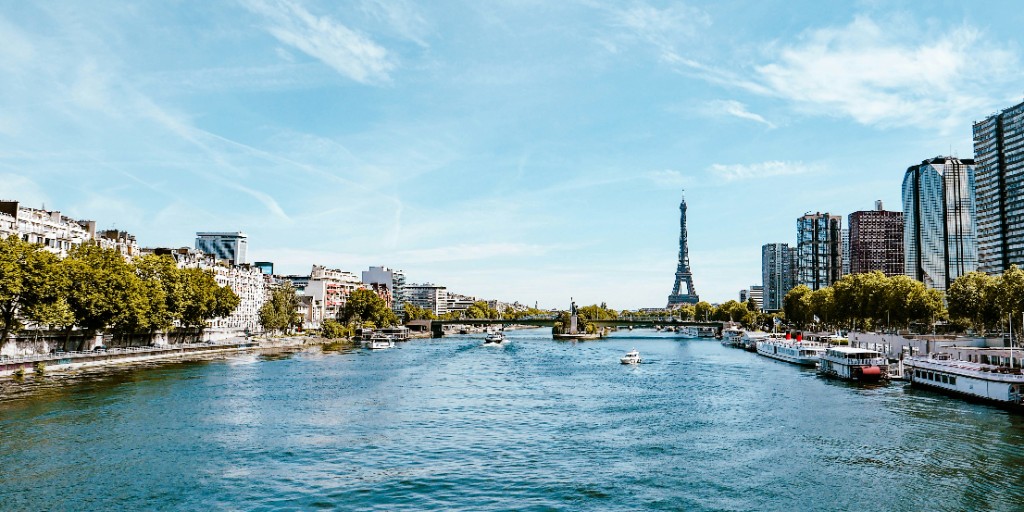
Hard to beat for culture, walkability, and career options. Your employer reimburses 50% of the Navigo pass. The main downside is that Paris prefecture wait times (6 to 12 months) are much longer than regional prefectures (1 to 4 months).

France's gastronomic capital as quoted by Michelin, OnlyLyon tourism board, and French media. Strong job market (biotech, tech, banking), excellent public transit. It's less English-friendly than Paris and winter fog averages 42 days/year, but the prefecture is much faster and more organized.
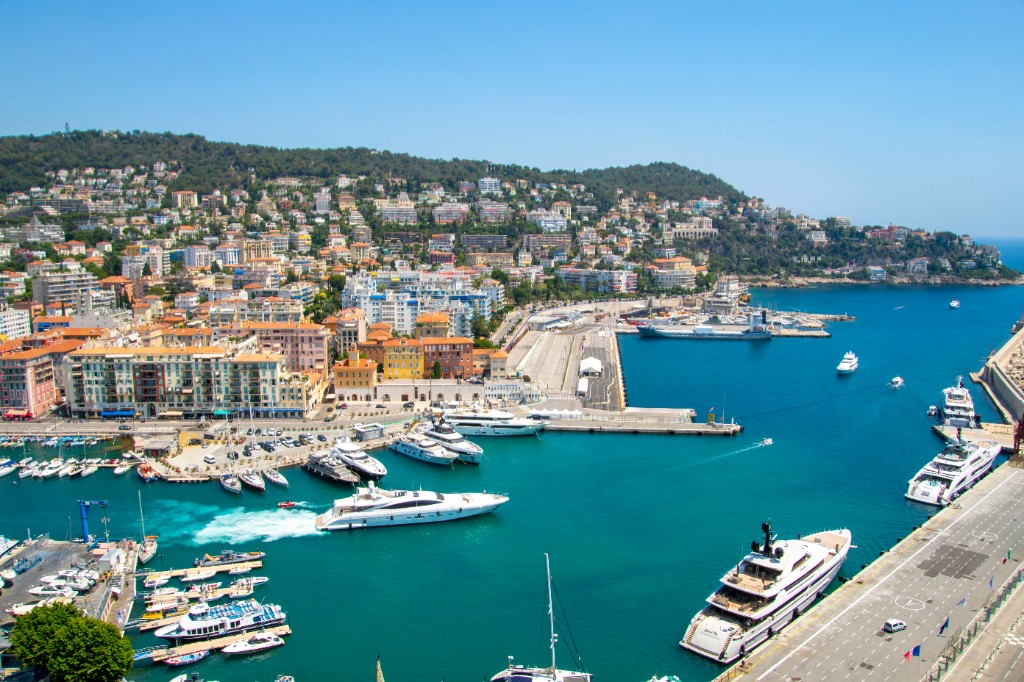
With 300 days of sun and the Mediterranean on your doorstep, Nice is hard to beat for lifestyle. There's a growing tech hub at Sophia Antipolis, though summer tourists flood the city from June to September and the rental market gets tight during those months. Nightlife along the Promenade des Anglais and Old Town runs year-round.

Vineyards on your doorstep and a growing tech and aerospace sector make Bordeaux a solid pick. Schools are excellent, prefecture processing is fast, and the riverside walkability is beautiful. The cost-to-quality ratio is well balanced, though English-speaking doctors are growing but still limited.

Home to Airbus and France's space industry, Toulouse has strong aerospace and tech jobs and is the cheapest major city in the country. Prefecture processing is the fastest in France, the south-west climate is sunny, and international schools are growing. A car is helpful outside the city center.
Housing, Landing & Your First 90 Days
In France, "unfurnished" often means a truly empty shell. Short-term vs. long-term rentals, the rental dossier, guarantor options, avoiding scams, and a week-by-week timeline for your first three months.
Renting first allows time to establish the banking and tax history required for French mortgages. Purchasing requires a French bank account, tax records, stable income proof, and local knowledge, which takes time to build. Some investors or those with citizenship paths may consider buying earlier. Either way, understanding the rental market is valuable even if you ultimately buy.
Fake listings are common on platforms like Leboncoin and even some international sites. The French government maintains an official page on rental scams with current red flags.
- Never pay before viewing in person. Requesting money before a visit is illegal in France. This includes "reservation fees," holding deposits, and first month's rent.
- Watch for these red flags: prices well below market rate, communication only via WhatsApp or Telegram, a landlord who claims to be abroad and cannot show the property, and requests for wire transfers or cryptocurrency.
- Report fake listings through the THESEE platform, the government's online tool for reporting internet-based fraud. You can file anonymously.
Unfurnished in France often means no fitted kitchen and sometimes no light fixtures, not just an empty living room. The lease types below help you pick the right commitment for how long you plan to stay.
- Furnished (meublé): The lease minimum is 1 year (9 months for students), and while rent runs 10 to 30% higher, it's usually the better option for your first year since you won't need to buy furniture or appliances. Landlord provides bed, table, chairs, cooking equipment, fridge, and storage as defined by law.
- Unfurnished (vide): Lease minimum 3 years. Lower rent. You're buying everything from lightbulbs to a kitchen (yes, many French apartments come without a kitchen). Better long-term value if you're staying 2+ years.
French landlords review competing dossiers the way hiring managers review resumes. Yours needs to be complete, organized, and ready to submit within hours of a viewing. Here is the legally authorized document list:
- Valid ID (passport with visa page)
- Proof of current address (last 3 rent receipts or host attestation)
- Proof of employment (work contract, or company registration for freelancers)
- Last 3 payslips or last 2 years of tax returns (avis d'imposition)
- Last tax notice (avis d'imposition) if available
- Proof of income showing you earn at least 3x the monthly rent
- Guarantor documents (same set of documents for your guarantor)
- If no French guarantor: Visale certificate or GarantMe approval
| Visale | GarantMe | |
|---|---|---|
| Cost | Free (government-backed) | About 3.5% of annual rent |
| Eligibility | Ages 18 to 31, or any age if entering first job or receiving housing aid | Open to all (income verification required) |
| Landlord acceptance | Widely accepted; backed by Action Logement | Widely accepted; private insurer guarantee |
| Application time | Online, typically approved within a few days | Online, typically approved within 24 to 48 hours |
| Coverage | Up to 1,300 euros/month rent (higher in Île-de-France) | No cap (scales with income proof) |
| Best for | Under-31 newcomers or first-job holders | Anyone outside Visale eligibility, or high-rent apartments |
The French property buying process is structured, notaire-led, and slower than what most North Americans expect. The upside: strong buyer protections are built into law.
In France, property transactions are handled by a notaire (a government-appointed legal officer), not a closing attorney or title company. The notaire is a neutral party who represents the transaction itself, not the buyer or the seller. You can appoint your own notaire at no additional cost. The fees are split between them, not doubled.
Step by step:
- Search: Use portals like SeLoger, Le Bon Coin, or Bien'ici. You can also work with a local agent immobilier (estate agent) or buy directly through a notaire's office, which can mean lower total cost since no agent commission applies.
- Offer (offre d'achat): You submit a written offer specifying the price you are willing to pay, the property details, and a validity period (usually 1 to 2 weeks). Unlike North American markets where bidding wars push prices above asking, in France offers typically match or go below the listed price. Overbidding is uncommon. The asking price is generally treated as a ceiling, not a starting point. It is also illegal for the seller to require any payment or deposit at the offer stage. Once the seller accepts, they are legally committed and must stop showing the property to other buyers.
- Compromis de vente: The preliminary contract, signed by both parties. You pay a deposit (typically 5 to 10% of the purchase price), held in escrow by the notaire. French law gives you a 10-day cooling-off period (delai de retractation) after signing, during which you can withdraw for any reason and get your deposit back in full.
- Conditions suspensives: The compromis typically includes conditions that must be met for the sale to proceed. The most common is obtaining a mortgage. If you apply and are refused, you can cancel without losing your deposit (provided this condition was written into the compromis).
- Completion (acte de vente): Usually 2 to 3 months after the compromis. You sign the final deed at the notaire's office. Keys are handed over, and the notaire registers the property with the land registry.
Costs on top of the purchase price:
- Frais de notaire (notaire fees and transfer taxes): typically 7 to 8% for existing properties, 2 to 3% for new-build. You can estimate the exact amount here. These are set by law and are not negotiable.
- Agent immobilier commission (if applicable): typically 4 to 8%, usually priced into the sale.
- Property survey: not mandatory in France (unlike the US), but strongly recommended for older properties.
Getting a French mortgage: French banks do lend to non-residents, but expect stricter terms: larger down payments (typically 20 to 30%), and your total debt payments must stay below 35% of income. French mortgage interest rates tend to be lower than US rates, and most are fixed-rate for the full term. The process takes 4 to 8 weeks. Use the official borrowing capacity simulator to estimate what you can afford.
Property taxes:
- Taxe fonciere: annual property tax paid by the owner, based on the cadastral value. Varies by commune. Budget 1,000 to 3,000 euros/year for a typical house outside Paris.
- Taxe d'habitation: eliminated for primary residences, but still applies to second homes.
- Week 1 to 2: In your first two weeks, validate your VLS-TS visa online through the OFII portal, get a French SIM (Free Mobile is 19.99 euros/month for unlimited), and book your bank account appointment.
- Week 2 to 4: Once your bank account opens and you have your RIB, start apartment hunting with your dossier ready and register with CPAM for health insurance; in competitive markets you'll want multiple viewings each week, so keep your dossier ready for same-day submission.
- Week 8 to 12: By this window you should receive your temporary social security number; register your médecin traitant on Doctolib, set up your mutuelle, and you're functionally settled.
Moving Belongings
Shipping your household goods, customs exemptions, vehicle imports, and what to expect with timelines and costs.
France allows a customs exemption called changement de residence (change of residence) for people relocating permanently. Personal belongings you have owned and used for at least 6 months can enter France duty-free and TVA-free, provided you declare them correctly.
Conditions (for non-EU residents):
- You must have resided outside France for at least 12 months before the transfer
- Each item must have been owned and used for at least 6 months
- The goods must have already been subject to customs duties or taxes in the country of origin
What qualifies: Furniture, clothing, books, electronics, kitchen equipment, personal items, and one personal vehicle (owned and registered in your name for at least 6 months). Pets are handled separately under EU pet passport rules (see the Pets section).
What does not qualify: Alcohol and tobacco above personal allowances, items under 6 months of ownership, items intended for resale, and goods destined for a secondary residence (no franchise applies).
How to do it:
- Prepare a detailed, dated, and signed inventory of everything you are shipping, with estimated values (two copies). French customs requires this at the point of entry or in advance.
- Provide proof of your new French residence (lease, property deed, or attestation d'hebergement) and proof of your previous residence abroad (utility bills, tax returns).
- You have 12 months from your official arrival date to complete the import of all belongings.
- If using a moving company, they typically handle customs paperwork on your behalf. Confirm this in writing before signing.
- For questions, call Infos Douane Service: 0 800 94 40 40 (free, Monday to Friday, 8h30 to 18h).
If you are shipping a vehicle: The vehicle must pass a French controle technique (technical inspection). You will need to re-register it and obtain a French carte grise through the ANTS online portal. Bring the original title and registration from your home country.
Budget and timelines: A full household shipment (1 to 2 bedrooms) from the US to France typically costs 3,500 to 7,000 dollars by sea. Larger homes run 8,000 to 12,000 dollars. Ocean transit from the US East Coast to Le Havre is roughly 12 to 15 days port to port for a full container. Add 2 to 4 weeks for door-to-door logistics, bringing the total to roughly 4 to 8 weeks. Summer (May to September) is peak season with higher rates. These are industry estimates, not fixed government rates. Get quotes from at least three companies.
Transportation & Phone
Public transport passes, TGV travel and savings tips, driver's license exchange rules by country, and keeping your home country phone number.
France's public transit network covers most of the country by rail, metro, tram, and bus, and in major cities it's good enough that most residents don't own a car. Monthly passes run 90.80 euros in Paris and about 74 euros in Lyon.
France's high-speed rail (TGV) connects every major city, with travel times that make weekday commutes or weekend trips easy: Paris to Lyon takes about 2 hours, Paris to Bordeaux about 2 hours, and Paris to Marseille around 3 hours 15 minutes. Book through the SNCF Connect app, or use Trainline which covers SNCF plus 270+ European rail operators in one search. Prices range from about 19 euros (booked early, off-peak) to 120+ euros (last minute, peak). The Carte Avantage (49 euros/year) gives up to 30% off on TGV INOUI and Intercités trains. Separate Carte Avantage versions exist for under-28s, over-60s, and families, each at the same price. If you travel between cities even a few times per year, the card pays for itself quickly.
France has exchange agreements with some countries and sub-national regions. If your license qualifies, you can exchange it for a French one without taking a test. If not, you must pass the French driving exam (code + practical), which is in French.
- Exchange-eligible US states: As of 2026, exchange agreements exist with about 13 states and territories including Arkansas, Colorado, Connecticut, Delaware, Florida, Illinois, Iowa, Maryland, Michigan, New Hampshire, Ohio, Pennsylvania, South Carolina, Texas, and Virginia. The list changes; verify at your prefecture.
- Canada: Full reciprocal exchange for all provinces. Bring your Canadian license, a certified translation, and proof of address.
- UK: Under the post-Brexit UK-France driving license agreement, UK licenses remain directly exchangeable without a test through 2026. You can drive on your UK license for 1 year, after which you should apply for the exchange at your prefecture. Check service-public.fr for current status, as this agreement is subject to renewal.
- Australia: A France-Australia exchange agreement exists for certain states and territories. Check service-public.fr for the current list of eligible Australian states. If your state is not covered, you will need to pass the French driving exam after 1 year of residency.
- Timeline: You can drive on your foreign license for 1 year after establishing residency, and after that you'll need a French one. Prefecture processing times vary, so it's worth starting the process well before the deadline.
Many services, banks, and two-factor authentication codes are tied to your home number. Losing it creates real problems. Set this up before you leave.
- Google Voice (US numbers): Port your number to Google Voice ($20 one-time fee) before cancelling your US carrier. You keep it permanently, accessible over WiFi, and it works for WhatsApp verification.
- WhatsApp: Verify your WhatsApp account with your home number before leaving. The original SIM is not required after verification, and WhatsApp is the standard messaging app across Europe.
- Canadian numbers: Fongo or TextNow can hold a Canadian number for free or low cost. VoIP apps like these work over WiFi and let you receive Canadian calls and texts.
- UK numbers: Some UK carriers (giffgaff, Three) allow EU roaming for limited periods. For longer stays, port to a VoIP service like Andrews & Arnold or Sipgate before you leave.
- Two-factor authentication: Before cancelling your home carrier, update 2FA on all bank accounts, email providers, and crypto wallets to either an authenticator app (Authy, Google Authenticator) or your new setup. Losing access to 2FA codes is a common tech headache for expats.
- Access home country services with a VPN: Some home country banking apps and government portals block French IP addresses. A VPN like NordVPN restores access for tax filing, your old bank, and home streaming libraries.
Moving to France with Pets
Import documentation requirements, breed restrictions, the EU pet passport, and everyday life with pets in France.
France is very pet-friendly, but the import process requires specific veterinary documentation completed on a tight timeline.
- Microchip: A 15-digit chip in the standard European format is required, so if your pet has an older or non-standard chip, bring a compatible scanner just in case. See official EU pet travel rules.
- Rabies vaccination: Must be administered after microchipping and at least 21 days before travel. Keep the vaccination certificate with the microchip number recorded on it.
- Health certificate: Required within 10 days of departure, no earlier. US residents use APHIS Form 7001 (endorsed by USDA-APHIS); Canadians need a CFIA-accredited vet certificate; UK residents need an Animal Health Certificate; Australians need a Department of Agriculture export permit. Full details at Service-Public.fr.
- EU pet passport: Once in France, visit a vet to convert your import certificate into an EU pet passport (typically 30 to 50 euros). This replaces the import certificate and is your pet's travel document across Europe.
Dogs are welcome in most restaurants, cafés, and shops (not supermarkets or food markets). Many apartments allow pets, but some landlords restrict them. Check the lease before signing. Vet care is high-quality and affordable compared to the US: a standard consultation is 40 to 60 euros. Pet insurance (assurance animaux) costs 15 to 50 euros/month and covers major procedures.
Employment, Remote Work & Freelance
Finding work as a foreigner, CDI and CDD contracts, employee rights, remote work legality, the micro-entrepreneur regime, and teaching English.
- Job boards: LinkedIn (dominant for professional roles), Indeed.fr, WelcomeToTheJungle.com (startups and tech), Apec.fr (cadres/management), France Travail (public employment service). For English-language roles: FusacJobs.com, Paris Job Board.
- Networking: Personal recommendations carry more weight than cold applications in French hiring culture. AmCham, the Franco-British Chamber, and coworking spaces are practical starting points.
- French CV format (as detailed by VisualCV's France CV Guide): Stick to one page in reverse-chronological order, with photo, date of birth, and nationality in the header (standard under French hiring norms), plus a formal cover letter (lettre de motivation).
French employment contracts come in two main types, and your residence permit type depends on which one you have:
- CDI (Contrat à Durée Indéterminée, permanent contract): The permanent contract. Termination requires documented cause, formal process, and often severance, which is why landlords, banks, and the prefecture all prefer it. Qualifies you for the "salarié" residence card.
- CDD (Contrat à Durée Déterminée, fixed-term contract): A fixed-term contract capped at 18 months (extendable once) that may only be used for specific legal reasons such as replacement, seasonal work, or a temporary increase in workload, and it maps to the "travailleur temporaire" residence card.
Key employee rights: 25 weekdays of paid vacation plus 11 public holidays, 35-hour legal workweek (overtime paid at 125% to 150%), employer-funded mutuelle (minimum 50% of premium), and strong protections against wrongful termination. Employees whose contracts stipulate more than 35 hours/week may also receive RTT (Réduction du Temps de Travail, extra days off for working above 35h) days, which are additional days off negotiated through company-level agreements (not automatic, not universal). The probationary period (période d'essai) is 2 to 4 months for most positions, renewable once.
If you're employed by a foreign company and working from France, the legal situation is more complex than most people realize (per Service-Public.fr):
- Under 183 days: Technically requires work authorization. Tourist status prohibits all work.
- Over 183 days: Triggers French tax residency. Employer may need French registration or EOR service. Urssaf social charges also apply.
- Legal visas: Talent Passport (salary above the current threshold) or micro-entrepreneur (invoice employer as client).
The micro-entrepreneur (formerly auto-entrepreneur) status is the simplest way to freelance legally in France. Register online through the Guichet Unique (the single government portal for all business registration in France). Declarations and social charges are then managed through autoentrepreneur.urssaf.fr.
- Revenue caps (2026): 85,800 euros/year for services, 188,700 euros/year for goods. Above these thresholds, you must switch to a standard business structure.
- Social charges: About 22% of revenue for services or 12.3% for goods, billed quarterly. No revenue in a given quarter means nothing owed.
- Tax: You can opt for the "versement libératoire" (flat tax of 1 to 2.2% on revenue) if your household income is below a threshold. Otherwise, revenue is added to your income tax declaration.
- For visa holders: You need a "entrepreneur/profession libérale" residence card. This requires showing that your activity is self-sustaining and brings in enough income.
Teaching English is one of the most common side jobs for Anglophone expats. You do not legally need a TEFL certificate to teach privately, but having one (or a degree) helps you charge more and find students.
- Finding students: Superprof.fr is the largest tutoring platform in France. Also post on Le Bon Coin (services section), local Facebook groups, and community boards at your boulangerie or médiathèque. Word of mouth builds fast once you have 2 to 3 students.
- Rates: Private English lessons in France typically run 20 to 40 euros/hour depending on city and your qualifications. Conversation practice is at the lower end, exam prep and business English at the higher end.
- Language schools: Wall Street English, Berlitz, and local independent schools hire native speakers as salaried employees (CDD or CDI contracts). These do not require micro-entrepreneur status.
- Legal requirement: For private teaching, register as a micro-entrepreneur through the Guichet Unique to invoice clients legally. You need a visa that permits self-employment (salaried, Talent Passport, or entrepreneur/profession libérale).
Raising Kids in France
CAF family benefits, childcare options, the school system, enrollment process, international and bilingual schools by city, and what to expect raising children as an expat.
- Crèche (municipal daycare): The most sought-after option, with income-based fees that can be as low as 0.50 euros/hour and consistently high quality. The catch is that waiting lists are long, especially in Paris, so consider applying as soon as you have a French address, ideally before the baby is born. Use monenfant.fr to find available childcare options by location.
- Assistante maternelle: A licensed childminder who cares for children in their own home (up to 4 children). Fees: 3 to 6 euros/hour before subsidies. CAF reimburses a portion through the PAJE (Prestation d'Accueil du Jeune Enfant, the under-3 childcare benefit).
- Garde à domicile: A nanny at your home is the priciest option but also the most flexible, and you can share one with another family (garde partagée) to split costs, with CAF subsidies available.
France has a noticeably different relationship with children in public spaces compared to many Anglophone countries. Children are expected to behave in restaurants and public transport, and most establishments welcome well-behaved kids. The cultural expectation leans toward early autonomy: French children often walk to school alone, play unsupervised, and are included in adult mealtimes from a young age rather than eating separately.
As an expat parent, navigating two cultures is part of the experience. Keeping your home-country language alive requires deliberate effort: consistent language use at home, books, media, and ideally a community of speakers. Bilingual children typically pass through a phase of mixing languages before separating them, which is normal and temporary.
Public education in France is free, secular, and compulsory from age 3 to 16. The system applies regardless of the child's nationality. Your child has the right to enroll in the local school assigned to your address.
- École maternelle (ages 3 to 5): Free public preschool with structured educational programs. After-school care (périscolaire) is available for a small fee.
- École élémentaire (ages 6 to 10): Free public primary school. National standardized curriculum. Non-French-speaking children can access UPE2A (Unité Pédagogique pour Élèves Allophones Arrivants) language support classes.
- Collège (ages 11 to 14): Free public middle school. Four years.
- Lycée (ages 15 to 17): Three years culminating in the baccalauréat exam, required for university admission.
Step 1: Register at your mairie (city hall) with your proof of address and child's birth certificate. Step 2: The mairie assigns you to the local school. Step 3: Complete enrollment at the school directly. For children 6+, an academic evaluation determines their class placement. Enrollment must happen by June for the September start, though mid-year arrivals are accommodated.
If your child does not speak French or you want instruction in English, there are two main paths: private international schools (fees: 5,000 to 30,000+ euros/year) or bilingual sections within public schools (sections internationales, free but competitive). Below are options for each of the five cities covered in this guide.
Paris:
- Private international: American School of Paris (ASP), International School of Paris (ISP), École Jeannine Manuel, Marymount, British School of Paris. Widest selection in France.
- Public bilingual sections: Sections internationales at Cité Scolaire Internationale (7th arr.), Collège/Lycée Honoré de Balzac (17th), Lycée Claude Monet (13th). Competitive admission with language testing.
Lyon:
- Private international: Cité Scolaire Internationale de Lyon (CSI, actually public with international sections), International School of Lyon (ISLYON), Ombrosa.
- Public bilingual sections: CSI de Lyon in Gerland is the standout. Free international sections in English, German, Spanish, Italian, Japanese, and more. Apply early.
Bordeaux:
- Private international: Bordeaux International School (BIS), École Internationale de Bordeaux.
- Public bilingual sections: Sections internationales at Lycée François Magendie and Collège Cheverus. English and other languages available.
Toulouse:
- Private international: International School of Toulouse (IST), Toulouse International School.
- Public bilingual sections: Sections internationales at Collège de Tournefeuille, Lycée International Victor Hugo de Colomiers. Large aerospace expat community means English-language options are relatively well established.
Nice:
- Private international: International School of Nice (ISN), Mougins School (British curriculum, nearby), CIV (Centre International de Valbonne, public with international sections).
- Public bilingual sections: CIV in Sophia Antipolis offers free international sections in English and other languages. Highly regarded. Bus service from Nice available.
For non-French speakers entering public school: All children have the legal right to enrol in their local school regardless of language. Schools with more than a few foreign students offer UPE2A classes (Unité Pédagogique pour Élèves Allophones Arrivants): dedicated French-language support for 12 to 15 hours per week while the child attends regular classes the rest of the time. The CASNAV (Centre Académique pour la Scolarisation des Enfants Allophones) in your académie coordinates this. Contact them before enrolment.
- Crèche (municipal daycare): The most sought-after option, with income-based fees that can be as low as 0.50 euros/hour and consistently high quality. The catch is that waiting lists are long, especially in Paris, so consider applying as soon as you have a French address, ideally before the baby is born. Use monenfant.fr to find available childcare options by location.
- Assistante maternelle: A licensed childminder who cares for children in their own home (up to 4 children). Fees: 3 to 6 euros/hour before subsidies. CAF (Caisse d'Allocations Familiales, the family benefits office) reimburses a significant portion through the PAJE (Prestation d'Accueil du Jeune Enfant, the under-3 childcare benefit).
- Garde à domicile: A nanny at your home is the priciest option but also the most flexible, and you can share one with another family (garde partagée) to split costs, with CAF subsidies available.
Social Life & Settling In
Cultural norms, building a social life, expat communities, identity in France, mental health resources, and when to reassess the move.
- Greetings matter: Saying "bonjour" when entering a shop, pharmacy, or doctor's office is expected.
- Formality defaults: Using "vous" with people you don't know well is standard. Addressing people as Madame or Monsieur and using formal email closings is common in professional and administrative settings.
- The lunch shutdown: Most businesses, government offices, and service providers shut down between roughly 12:00 and 14:00.
- Direct expression: Public debate and critique of institutions are common parts of social life, particularly in urban areas. This can feel unfamiliar at first but is generally a form of engagement rather than negativity.
- Silence isn't awkward here. In many social settings, people are comfortable with pauses. This takes some getting used to if you're coming from the US or Canada where chit chatting is a cultural norm.
- Quiet hours are enforced: No DIY, power tools, or loud gardening on Sundays or public holidays. No loud work between 12:00 and 14:00 on weekdays either. Some communes extend restrictions to Saturday afternoons. Violations can result in fines of up to 68 euros, and neighbours or the local maire can report you. Check your commune's arrêté municipal on noise for exact hours.
- Tapage diurne (daytime noise): Even during allowed hours, excessive noise that disturbs neighbours can be sanctioned. The standard is "troubles anormaux de voisinage" (abnormal neighbourhood disturbance), and it applies 24 hours a day, not just at night. This is one of the most commonly cited surprises among newcomers to France.
- Tipping is not expected: Service is included in all restaurant bills by law (service compris). Leaving a tip is optional and always small: rounding up the bill or leaving 1 to 3 euros for good service is generous. For haircuts, taxis, and delivery, the norm is the same: nothing expected, a euro or two appreciated. Do not tip by percentage the way you would in the US or Canada.
Expat networks form fast and are useful for practical help, like finding a plumber or figuring out prefecture paperwork. French friendships develop more slowly, but tend to run deeper once they do.
Where do French people actually hang out?
- Associations (clubs): France has over 1.5 million registered associations, and this is how most French adults make new friends. Walk into your local mairie and ask for the guide des associations (every city publishes one). Some popular options for newcomers include UCPA for outdoor sports and adventure trips (skiing, surfing, hiking, with group trips across France), FF Randonnée local hiking clubs, cycling clubs (FFC), theater troupes, book clubs, and volunteer organizations. Pick something you genuinely enjoy and show up consistently for about 3 months.
- Apéro culture: The French equivalent of happy hour, but at someone's home. An apéro is drinks and snacks (usually wine, chips, olives, charcuterie) before dinner. Getting invited to one is a sign of real friendship. To initiate: invite neighbors or colleagues for "un petit apéro" on a Friday evening. Keep it casual. Bring good wine (10 to 15 euros, ask your local caviste for a recommendation).
- The marché (market): Weekly outdoor markets are social hubs. Go to the same one every Saturday, buy from the same vendors, chat briefly. After a few months, you'll know people.
- Cafés as a third place: Pick a neighborhood café and become a regular. Sit at the comptoir (bar), not a table. That's where conversation happens. The waiter and other regulars will start acknowledging you after 3 to 4 visits.
- Parents' networks: If you have kids, the school gate is your single best social on-ramp. French parents bond over school logistics, birthday parties, and the endless WhatsApp group for the class. Accept every invitation for the first year.
Expat platforms and groups (online and offline)
- Facebook Groups: "Americans in Paris" (33k+ members), "Expats in Lyon," "Expats in Bordeaux," "English Speakers in Toulouse," "Brits in France." These are among the largest and most active. Search for "[Your City] + expats" or "[Your City] + English speakers." Good for advice, apartment leads, and meetup announcements.
- InterNations: Global expat platform with local groups in every major French city. They host monthly events (usually drinks at a bar) that draw a slightly more professional and international crowd, and while browsing is free, full access requires a paid membership.
- Meetup.com: Search for language exchange meetups, hiking groups, board game nights, or "new in [city]" groups. Quality varies, but the language exchanges are consistently good for meeting both French people and other expats.
- Bumble BFF: The friend mode of the dating app. Works better than you'd expect in Paris, Lyon, and Bordeaux for meeting other expats and French people looking to practice English.
- Alliance Française classes: Not just for learning French. The classes themselves are social. You'll meet other expats at the same stage as you. Many Alliance branches organize cultural outings and social events for students.
- Coworking spaces: If you work remotely, a coworking membership at places like Morning Coworking, WeWork, or a local independent puts you in a built-in community where friendships often start around the coffee area, with hot desks typically running 200 to 400 euros per month.
- LGBTQ+ life: France legalized same-sex marriage in 2013 (mariage pour tous). Paris, Lyon, Montpellier, and Bordeaux have vibrant queer communities. Legal protections are strong, including the anti-discrimination law covering sexual orientation and gender identity. Rural areas and some suburbs can be less accepting. The general culture is "private life is private," which means less visible celebration but also less daily friction than in many places. The SOS Homophobie helpline (01 48 06 42 41) provides support in case of discrimination.
- Race and ethnicity: France officially does not collect racial or ethnic data in its census (the principle of universalism). This means discrimination exists but is harder to measure or discuss publicly. The Défenseur des droits (Defender of Rights) is the independent authority handling discrimination complaints; you can file a complaint online for free. As a non-white expat, your experience will vary a lot by city and neighborhood. Paris is the most diverse. Smaller cities can feel much less so.
- Religion: France is fiercely secular (laïcité, established by the 1905 law on separation of church and state). Religious expression in public institutions (schools, government offices) is restricted by law. This applies equally to all religions. You're free to practice privately, but overt religious symbols in professional or educational settings may draw attention or pushback.
Moving abroad can be a mental health event. The first 3 to 6 months often involve a cycle of euphoria, frustration, low-grade depression, and then gradual adjustment. Here are some English-friendly resources in case you need them.
English-speaking support:
- SOS Help: English emotional support helpline (01 46 21 46 46, daily 3pm to 11pm).
- US Embassy Paris list: Directory of English-speaking psychologists and psychotherapists.
- Counselling in France: Directory of English-speaking therapists across the country.
French public system (free with carte vitale):
- CMP (Centres Médico-Psychologiques): Free psychiatric clinics. GP referral recommended.
- 3114: National suicide prevention line (24/7).
- Santé mentale info service: Official government mental health portal.
Emergencies: 15 (SAMU), 112 (Europe), or go to hospital ER.
- Is the unhappiness situational or structural? A bad apartment, a difficult boss, or winter blues are fixable. A fundamental mismatch with French culture, persistent isolation, or career stagnation may not be.
- Have you given it a real try? The first year is adjustment. Most people report that life normalizes between 18 and 24 months. Give it that long before deciding.
- What would you be going back to? Nostalgia is selective. Visit for at least two weeks before making a final decision.
- What's the cost of staying vs. leaving? Financial (breaking a lease, moving costs, starting over), social (relationships built here), and emotional (sense of failure vs. relief).
Every year, ask yourself:
- Am I happy here, or am I running from something back home?
- Is my French improving? Am I making an effort?
- Do I have at least one meaningful friendship outside the expat bubble?
- Is my financial situation stable or improving?
- If I left tomorrow, would I regret it?
Some people stay for decades. Others leave after two years and are glad they tried. What matters is whether the decision is yours.
Residence Renewals & Citizenship
Residence card renewals, visa transition questions, the path to citizenship, and cross-border financial planning including pensions and property.
Your first titre de séjour is typically valid for 1 year. Renewals happen at your prefecture, and apply at least 8 weeks before expiry. Paris prefecture typically runs 6 to 12 months behind; apply earlier if you are in Île-de-France. Check your prefecture's website for current estimates. The prefecture will verify that your situation hasn't changed (same employer, same address category, continued income).
- After 1 year: Renewal for a carte de séjour pluriannuelle (multi-year card), typically 2 or 4 years. Requires proof of continued activity and integration (A2 French level).
- After 5 years: Eligible for the carte de résident (10-year card) or French citizenship by naturalization.
- Carte de résident: 10-year renewable card. Grants you the right to work in any profession. Requires 5 years of legal, uninterrupted residence, stable resources, and integration into French society.
- Can you travel on an attestation de décision favorable? Yes, within the Schengen zone. The attestation plus your expired visa (or passport stamp) should be accepted at Schengen borders. For travel outside Schengen, it is riskier. Airlines may refuse boarding because they are not trained to recognize French administrative documents. If you must fly outside Schengen during this period, carry the attestation, a printed copy of the relevant legal text (Article R431-15 CESEDA), and contact the airline ahead of time.
- Cerfa 10070 (visa application for couples): Both partners fill out separate Cerfa 10070 forms. Each person is a distinct applicant even if you are married and applying together. Attach each form to its own supporting documents.
- VLS-TS Visiteur processing times: Processing times vary by consulate. From the UK, expect 2 to 6 weeks after submitting documents. From the US, 2 to 8 weeks depending on the consulate (San Francisco and Houston are generally faster than New York). After submission, there is no reliable way to check status. Do not book non-refundable travel until you have the visa in hand.
- Récépissé (temporary receipt): If your titre de séjour has expired but your renewal application is pending, the prefecture should issue a récépissé. This document allows you to stay, work (if your previous card allowed it), and travel within France while waiting. Always request one if your renewal is running late.
You can apply for French citizenship after 5 years of continuous residence (reduced to 2 years if you completed French higher education or made "exceptional contributions"). Requirements per service-public.fr:
- French level B1 (oral and written), verified by a certified test (TCF, TEF, DELF).
- Knowledge of French history, culture, and values: From January 2026, this is verified through a civic examination.
- Stable income and clean criminal record:
- Integration into French society: evidence of social ties, community involvement, children in French schools, etc.
The application is filed online for mainland France residents. Processing takes 12 to 18 months. France allows dual citizenship with most countries (including the US and Canada).
- French retirement system: If you work in France (employed or self-employed), you contribute to the French pension system. Even 1 quarter of contributions gives you a right to a partial French pension. A full-rate pension requires 42 to 43 years of contributions depending on your birth year.
- Totalization agreements: France has social security agreements with the US and Canada that allow you to combine work credits from both countries toward pension eligibility. You won't lose the years you contributed in your home country.
- Investments: Cross-border investing is complex. Americans face PFIC (Passive Foreign Investment Company) rules that make most non-US funds costly to hold. Canadians should review RRSP treatment under the France-Canada treaty. British and Australian expats should check how their home ISA/superannuation accounts are treated under French tax law. French investment accounts (PEA, assurance-vie) are tax-efficient in France but may create issues with your home country's tax authority. Consult a cross-border advisor.
- Property: Buying property in France as a foreigner is straightforward legally. Financing is harder without 2+ years of French tax returns. Expect 20 to 25% down payment. Notary fees add 7 to 8% for existing properties.
Toolbox: Checklists, Links & Mini-Guides
Pre-move checklist, first 30 days, first 90 days, housing dossier, micro-entrepreneur setup, and tax registration.
- Research visa type using the decision tree (Part 3)
- Gather apostilled documents (birth certificate, marriage certificate, diplomas)
- Schedule consulate appointment (wait times vary; book early)
- Set up your Wise and Revolut accounts before you leave, using your home country address. If you register with a French address before you have French proof of residence documents, the platform will ask you to verify that address and you will not have the required documents yet. Update the address once you have a French utility bill or phone contract.
- Get a full health check and dental cleaning
- Fill prescriptions for 3+ months, get doctor's letter with generic drug names
- Once registered with CPAM, keep all medical receipts and feuilles de soins for reimbursement (you're covered even before the physical Carte Vitale arrives)
- Research French mobile plans or eSIM options for arrival (Free Mobile, Orange, SFR, Airalo eSIM)
- Notify your bank, tax authority, and employer of the move
- Book short-term housing for first 1 to 2 months (flexible-cancel Abritel, Booking.com, or aparthotel)
- Start gathering rental dossier documents (8 items, full list in Part 6)
- Book one-way flight
- If shipping household goods, expect roughly $3,200 to $4,500 for a 20ft container or $5,000 to $6,800 for a 40ft container from the US to France. Transit takes 20 to 35 days. Compare rates at MoverDB.
- Set up mail forwarding from your home address
- If moving with pets: schedule veterinary health certificate appointment (10 days before departure)
- Pack an "admin folder" in your carry-on: all original documents, 4 passport photos, copies of everything
- Validate VLS-TS visa via ANEF portal within 3 months of arrival. Pay the OFII tax (amount varies by visa type: check current fees at service-public.fr). This activates your right to work, healthcare, and bank account.
- Register new address with Service-Public.fr within 2 months. Updates tax notices, Carte Vitale delivery, voter registration, jury duty notices.
- Open French bank account. Required for rent payments (landlords demand SEPA direct debit), CPAM reimbursements, and utility contracts. Major banks include BNP Paribas, Société Générale, Crédit Agricole, and La Banque Postale. Americans may face extra steps due to FATCA (see banking section for details).
- Register with CPAM immediately after OFII. Healthcare reimbursements (70% doctor visits) start within days via bank transfer, even before physical Carte Vitale arrives (3 to 6 months).
- Declare médecin traitant (mandatory primary GP) within 30 days of CPAM registration. Unregistered patients get 30% reimbursement vs 70%+ with mutuelle. Use Doctolib.
- Week 2 to 4: Bank account opens, RIB in hand. Start apartment hunting with your dossier ready. Register with CPAM for health insurance.
- Week 4 to 8: Sign your lease. Set up electricity (EDF or Engie) and internet (Orange Fibre, Free, SFR, about 30 euros/month). Get a SIM data plan immediately (Lebara 10 euros/20GB). Register your address with the mairie if needed.
- Week 8 to 12: Receive your temporary social security number. Register your médecin traitant on Doctolib. Set up your mutuelle (lelynx.fr for comparisons). Apply for CAF benefits. Register with France Travail if job-seeking.
- DossierFacile rental package. Landlords legally require ID, 3 payslips/tax returns, address proof, income of at least 3x rent. Prepare digitally before arrival.
- Visale guarantee (free, ages 18 to 31) or GarantMe (3.5% annual rent). Solves the "no French guarantor" problem for newcomers.
- Revenue caps: 203,100 euros sales/hosting, 83,600 euros services. Exceed these and you move to régime réel taxation.
- Social charges: 22.1% services, 12.3% sales. Quarterly declarations via autoentrepreneur.urssaf.fr.
- Create impots.gouv.fr account. Non-residents register via the international portal before first déclaration (May).
Essential Tools
These are commonly used services by expats moving to France, most of which we have tested and still use today. Some are affiliate links, which cost you nothing extra and help keep the free sections of this guide online. See our full affiliate policy.
Moving to France with the help of this guide?
Your honest opinion helps other people find this resource and helps us make it better.